National Assembly Should Push To Designate Tantita Security Services As A Terrorist Organization, Not Pass Vote Of Confidence
- by Elaye, Bayelsa, HSN
- about 4 months ago
- 779 views
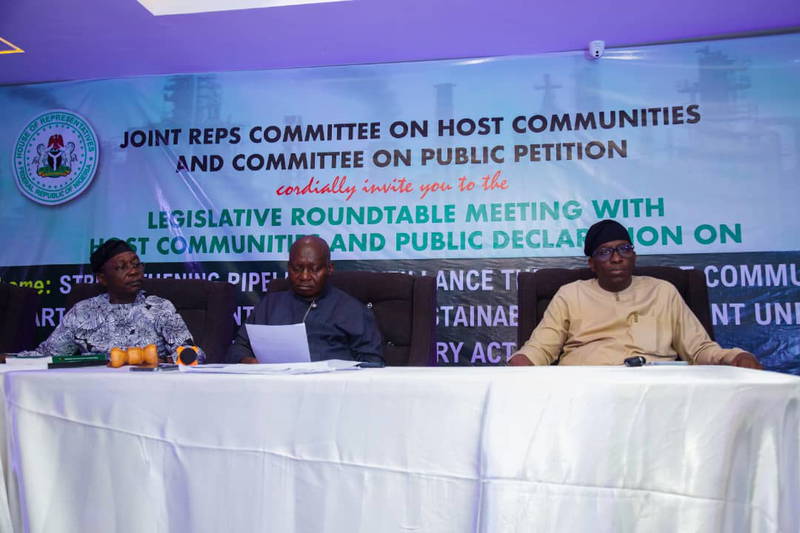
...As Niger Delta People Mandate Calls for Decentralization of Pipeline Surveillance
Tare Diseimoh, spokesperson of the Niger Delta People Mandate, has criticized a recent roundtable meeting involving 150 lawmakers who reportedly passed a vote of confidence on Tantita Security Services, a private pipeline surveillance contractor linked to Government Ekpemupolo aka Tompolo. He described the action as a national disgrace and raised concerns over the handling of security and oil sector management in the country.
The lawmakers are behaving as if they do not know about the alleged atrocities being committed by Tompolo’s Tantita Security Services across the Niger Delta region. According to the claims, Tompolo has been fully involved in kidnapping, killings, the running of private prisons, and gross human rights abuses in the region. Examples cited include the alleged kidnapping of Balamene Karowei, the alleged kidnapping of Charles Korubo, and reported cases of beheading of citizens in Rivers State.
According to Diseimoh, the lawmakers have failed to convene emergency sessions or hold meaningful discussions to address the growing insecurity across Nigeria. He said that while citizens continue to suffer kidnappings, violent attacks, and beheadings carried out by bandits and terrorists, lawmakers are instead focused on endorsing private security arrangements for personal gain rather than pushing for Tantita to be designated as a terrorist organization and addressing the country’s wider national security challenges.
He also criticized calls for the renewal and extension of pipeline surveillance contracts awarded to Tantita Security Services, saying there is no clear justification given the current state of Nigeria’s crude oil production. He alleged that some individuals who attended a meeting in Owerri claiming to represent host communities were influenced and did not reflect the true interests of the Niger Delta people.
Diseimoh further argued that no single contractor should dominate pipeline surveillance across the Niger Delta. He called for a system where all Niger Delta states and host communities are actively involved in securing oil infrastructure within their respective areas, rather than a centralized arrangement.
He urged President Bola Tinubu to carefully assess the situation, warning that certain political and business interests may be influencing decisions in ways that do not serve national development, particularly in the oil and gas sector.
He referenced the period before 2015 under former President Goodluck Jonathan, stating that pipeline surveillance was then decentralized across the Niger Delta states. According to him, crude oil production at the time reportedly exceeded 2.4 million barrels per day, with broader stalkholders and host communities involvement and shared intelligence across regions.
He added that critics of the current system believe the removal of decentralization contributed to increased crude oil theft and weakened accountability. They argue that decentralization would improve transparency, enhance community participation, and strengthen the protection of national assets.
Diseimoh also highlighted Nigeria’s crude oil production performance in early 2026. He said production stood at about 1.63 million barrels per day in January, dropped to 1.48 million in February, rose to 1.52 million in March, and slightly increased to 1.56 million in April, all below government targets.
He stated that the country recorded a cumulative shortfall of over 34 million barrels within the four-month period. Based on the official benchmark price of $64.85 per barrel, he said Nigeria may have lost more than $2.2 billion in potential revenue.
He questioned the rationale behind renewed calls for extending pipeline surveillance contracts, arguing that Nigeria should prioritize improved production performance, stronger security outcomes, and better economic returns.
President Tinubu should know that Tompolo’s Tantita Security Services is being described as a front used to cover up an organized crude oil theft network that allegedly involves Mele Kyari, Bala Wunti, senior dismissed officials of NNPCL, insiders within NNPCL, and other unseen actors. It is further alleged that the funds being used to organize press conferences in support of Tantita and to push for the monopoly of pipeline surveillance contracts are coming directly from this organized crude oil theft.
It is also alleged that the construction of facilities for the Navy and the Army, as well as the dollars being spent on members of the National Assembly, are all financed from proceeds of this organized crude oil theft. According to these claims, Tompolo’s Tantita Security Services is being used as the visible front to present these projects as legitimate, with the aim of deceiving both the President and the Nigerian people in order to secure the renewal of pipeline surveillance contracts and continue the alleged activities.
He called on President Tinubu to decentralize pipeline and oil infrastructure surveillance across Niger Delta states, emphasizing the need for community participation in protecting assets within their territories. However, he maintained that the Nigerian Armed Forces and other statutory security agencies must retain full control of national security operations.
He also urged the National Assembly to focus on broader national interests rather than engaging in what he described as support for private contractual arrangements.
Diseimoh concluded that peace in the Niger Delta has historically been achieved through inclusion, decentralization, and community engagement. He warned that ignoring these principles or suppressing dissenting views through parliamentary resolutions could increase public distrust and heighten tensions in the region.









0 Comment(s)